"The 'knowledge' of the philosopher places him among the dreamers,
for knowledge is a dream.
But the philosopher 'knowingly' agrees to dream, to dream of knowledge, agress to 'forget' the lesson of philosophy, only so as to 'prove' that lesson...
it is a vertiginous movement that can go on indefinitely"
"How wonderful and new and yet how gruesome and ironic I find my position vis-à-vis the whole of existence in the light of my insight! ...
I suddenly woke up in the midst of this dream, but only to the consciousness that I am dreaming and that I must go on dreaming lest I perish... (*) ...that among all these dreamers, I, too, the "knower," am dancing my dance,
that the knower is a means for prolonging the earthly dance and thus belongs to
the masters of ceremony of existence,
and that the
sublime consistency and interrelatedness of all knowledge
perhaps is and will be the highest means to preserve the universality of dreaming and the mutual comprehension of all dreamers and thus also the continuation of the dream."
"This philosophical agreement is the reader/writer's contract with the text... The abyss appears when Nietzsche, Freud, Heidegger, Derrida lift the lid of the
most familiar and comforting notions about the possibility of knowledge"
"In L'individuation psychique et collective, Gilbert Simondon developed a theory of individual and collective individuation, in which the individual subject is considered as an effect of individuation, rather than a cause. Thus the individual atom is replaced by the neverending ontological process of individuation. Simondon also conceived of "pre-individual fields" as the funds making individuation itself possible. Individuation is an always incomplete process, always leaving a "pre-individual" left-over, itself making possible future individuations. Furthermore, individuation always creates both an individual and a collective subject, which individuate themselves together."
This work impressed me so much! I've seen it this summer in Bienal de Cerveira. Inside the dark room, the wires were completely invisible (in the movie you can see the wires). The lighting is done with a simple group of moving light bars pointing to the wire structure.
Inside the room, the light and the movement of the light got into Existence. I saw the light as an object moving. It was moving exactly the same way everytime but in a different way, either in a different color, or direction, or speed. But the pattern was always there. But that's not all. I said phenomenology because WE could be THAT light crossing the wires. We are not the wires, we are not the light, we are the "light on the wires", we are that repetition, we are each of those moments were the light gets to the wire. We are not the wires! Our structure is not the structure of the wires! We are those explosions of light on the wires. The angles of our structure are the directions of that light on the wires. Our structure is the equation of the speed of that light on the wires. Humans are the need of the "light on the wires" to escape the wires.
My favourite director was Pasolini, but then I met Paradjanov. In this long interview, Paradjanov cites dozens of Russian directors and only one non Russian name appears: Pasolini. He was a fan of Pasolini. I was very suprised to see that, although uninformed, my film criticism is not just nonsense.
My favorite Russian composer was Shostakovich, and his bottle bottom glasses, but then I changed to Prokofiev, and my obsession for these 2 or 3 minutes of pure inconsistotragicism (and as disconcerting as Shostakovich).
Sometimes I forget the origins of my sweet Swiss memories, and also the origins of my general disbelief in science. It looks good, it sounds great, it is great but it is human, all too human. I have been there.
"Heidegger has said it: 'it is not we who speak language, it is language who speaks us'. It structures our world, it structures our sense of time, of identity, of human relations, of love, of violence, and so on. And so, when Foucault, very, very radically... and brilliantly says: 'there is no more man, there is no more author, etc, etc', when deconstruction speaks of language as an autonomous inward turning game as a dance around an infinity of possible meanings, these are ... footnotes to Heidegger.", George Steiner
Footnote: "In language there are only differences, and no positive terms", Saussure
It's a century long puzzle... Saussure, Husserl, Heidegger, Levi-Strauss, Sartre, Barthes, Foucault, Deleuze, Derrida...
1 - forma de escape - forma de distração (férias) - forma de preguiça - forma de evitamento (da realidade) 2 - forma de confronto consigo mesmo - forma de solidão profunda - forma de desenquadramento absoluto - forma de encontro com o desconhecido
Todos os dias me vens leitor com vontades de viajar 1 e falas comigo como o viajado. O meu viajar é o 2, não me venhas com evitamentos.
"Nous ne pouvons pas, nous allons tomber." "Venez jusqu'au bord!" "Nous ne pouvons pas, nous avons peur." "Venez jusqu'au bord!" Et ils y vinrent. Et il les poussa. Et ils volèrent...
I found this pocket spinozism in an old note book (I read Spinoza 3 years after writing this): happiness is freedom and freedom is the absence of internal ghosts and external domination.
A massificabilidade é uma propriedade dos elementos de cultura ligeiramente diferente da viralidade. A massificabilidade refere-se à expansibilidade e à não distante durabilidade. A viralidade refere-se à necessária reprodutibilidade dos elementos massificáveis.
A frase do dia foi ouvida fora do contexto: "as pessoas têm de começar a entender X"
Primeiro é necessário imaginar que esta pessoa algures no passado não tinha conhecimento de X, no entanto, neste momento, não só detinha esse conhecimento, como o reproduzia. Ora, é assim que funcionam os virus.
Esta frase em si denota a existência de um mecanismo de transmissão, como a maquinaria de uma célula utilizada pelo virus para se reproduzir. A célula neste caso é um pobre aparelho linguístico que, em determinado momento, não tinha conhecimento de X, mas que, pobre, foi infectado e passa, não só a deter o conhecimento (X, o virus) mas a reproduzi-lo, alegre.
"as pessoas têm de começar a entender a viralidade": um pobre coitado, alegre.
Entre os muitos draft posts não publicados deste blog há um sobre as razões da não massificação das culturas locais e a importação de algo mais massificável e consequente cópia local. Deixo aqui o que julgo ser um exemplo de algo profundamente incompatível com uma cultura de massas capitalista e seus grandes bastiões: o positivismo, a individualização (unicidade individual) e a mono-personalidade.
Cansaço Amália Rodrigues
Por trás do espelho quem está De olhos fixados nos meus? Alguém que passou por cá E seguiu ao deus-dará Deixando os olhos nos meus. Quem dorme na minha cama, E tenta sonhar meus sonhos? Alguém morreu nesta cama, E lá de longe me chama Misturada nos meus sonhos. Tudo o que faço ou não faço, Outros fizeram assim Daí este meu cansaço De sentir que quanto faço Não é feito só por mim.
I do keep strong memories of the moment I meet a master...
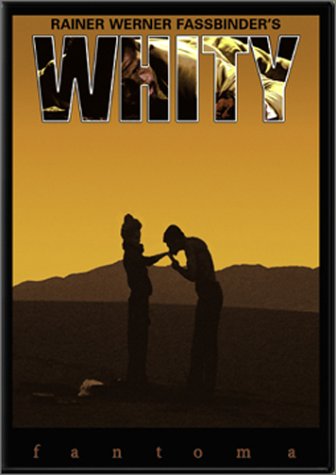
I remember the starting frames of Fellini, I remember the first chapter of Oppenheim. I remember the first glance into Goya, I remember the first page of Belo, I remember the first hour of Fassbinder. It was yesterday.
(250 jours aprés avoir acheté Les Milles Plateaux, este post draft, errado, inconsistente, existente, explicativo, pouco exploratório saiu com alguns traços Deleuzianos. Deleuze que, de tão difícil, nem consigo repetir, como se fosse um poema impossível de decorar, este post é um "oh mar e mar, quantos choros são lágrimas de par em par" de um detalhe do Mil Plateaux)
A teoria de sistemas, por principio holista, prefere os organismos aos mecanismos. Eu não. O ser organismo é tão negativo como o ser sujeito ou o ser significado: os três grandes inimigos do corpo-sem-orgãos do Artaud que o Deleuze usa. Mecanosfera.
Esta é uma das lições mais importantes da filosofia secXX que tenho lido: a visão mecanicista que retira o atributo "vontade" do sistema, isto é, que analisa o sistema como um mecanismo sem vontade. Alguns exemplos fáceis disto são as afirmações que sempre fazemos sobre "os ricos" ou "os professores" ou "o estado" e a facilidade com que atribuímos vontade a essas entidades. A ideia é simples: estas entidades não têm vontade, apenas existe uma miríade de micro mecanismos que levam a que a entidade como um todo se comporte de determinada forma. Micropolitics. Aqui, sobrevalorizar o mecanismo é simplesmente afirmar o reducionismo: a velha soma das partes que dá o todo. Aqui, dizemos que não é a soma das partes que forma o todo mas que são as partes e os seus mecanismos que formam o todo. Partes estas que são formadas por outras partes e outros mecanismos. Sub-mecanismos estes que interagem com outros mecanismos, de outros níveis. Nunca organismos (todos que são mais do que somas das partes). A negação da entidade Luís ou entidade estado. E a afirmação dos mecanismos que os compõem. A afirmação de mecanismos sinápticos, ou mecanismos sociais, ou mecanismos burocráticos, ou mecanismos electro-quimicos, ou mecanismos de circulação de fluidos. A afirmação do mecanismo marcha, ou do mecanismo fronteira mim/mundo.
Uma mecanosfera ou simplesmente mecanismos sem vontade. Mecanismos sem vontade porque não são organismos. É que dizer que os mecanismos não têm vontade, não organismos, equivale também a dizer que, por exemplo, não há organismo/entidade Luís e que os mecanismos que compõem a entidade Luís não têm vontade. Neste caso haveria apenas uma simples ilusão de que os mecanismos de subjectivação (que formam o sujeito Luís) têm vontade, ou objectivo. Não, são apenas mecanismos. Esses mecanismos são essa função. Os mecanismos não têm vontade, os mecanismos SÃO essa vontade. É algo que os compõe.
Se eu Luís te pedir muito para não leres este post, não é o organismo Luís a ter vontade, são os mecanismos que me compõem a agir naturalmente. Eu sou esse pedido. Que se liga ao estruturalismo do "Eu sou o meu discurso" e do "eu não sou a minha voz, sou a voz do sistema" que liga ao "eu não sou, o sistema é" que se trocarmos sistema por mecanismo (trocar estrutura por função, organismo por mecanismo) liga ao "eu não sou, os mecanismos que me compõe são". Por exemplo, eu (organismo inexistente) sou um subproduto do mecanismo de reprodução dos meus genes OU, invertendo, o mecanismo da fala de um jornalista tem como subproduto a comunicação social (organismo inexistente).
Isto tudo para preludiar esta ideia simples do Bourdieu (primeiros dois minutos):
"And indeed, it cannot be denied that the most successful practitioners of the art of life, often unknown people by the way, somehow contrive to synchronize the sixty or seventy different times which beat simultaneously in every normal human system so that when eleven strikes, all the rest chime in unison, and the present is neither a violent disruption nor completely forgotten in the past. Of them we can justly say that they live precisely the sixty-eight or seventy-two years allotted them on the tombstone. Of the rest some we know to be dead though they walk among us; some are not yet born though they go through the forms of life; others are hundreds of years old though they call themselves thirty-six. The true length of a person's life, whatever the "Dictionary of National Biography" may say, is always a matter of dispute. For it is a difficult business--this time-keeping; nothing more quickly disorders it than contact with any of the arts; and it may have been her love of poetry that was to blame for making Orlando lose her shopping list and start home without the sardines, the bath salts, or the boots. Now as she stood with her hand on the door of her motor-car, the present again struck her on the head. Eleven times she was violently assaulted."
"When this happened, Orlando heaved a sigh of relief, lit a cigarette, and puffed for a minute or two in silence. Then she called hesitatingly, as if the person she wanted might not be there, 'Orlando? For if there are (at a venture) seventy-six different times all ticking in the mind at once, how many different people are there not--Heaven help us--all having lodgment at one time or another in the human spirit? Some say two thousand and fifty-two. So that it is the most usual thing in the world for a person to call, directly they are alone, Orlando? (if that is one's name) meaning by that, Come, come! I'm sick to death of this particular self. I want another. Hence, the astonishing changes we see in our friends. But it is not altogether plain sailing, either, for though one may say, as Orlando said (being out in the country and needing another self presumably) Orlando? still the Orlando she needs may not come; these selves of which we are built up, one on top of another, as plates are piled on a waiter's hand, have attachments elsewhere, sympathies, little constitutions and rights of their own, call them what you will (and for many of these things there is no name) so that one will only come if it is raining, another in a room with green curtains, another when Mrs Jones is not there, another if you can promise it a glass of wine--and so on; for everybody can multiply from his own experience the different terms which his different selves have made with him--and some are too wildly ridiculous to be mentioned in print at all.
So Orlando, at the turn by the barn, called 'Orlando?' with a note of interrogation in her voice and waited. Orlando did not come.
'All right then,' Orlando said, with the good humour people practise on these occasions; and tried another. For she had a great variety of selves to call upon, far more than we have been able to find room for, since a biography is considered complete if it merely accounts for six or seven selves, whereas a person may well have as many thousand. Choosing then, only those selves we have found room for, Orlando may now have called on the boy who cut the nigger's head down; the boy who strung it up again; the boy who sat on the hill; the boy who saw the poet; the boy who handed the Queen the bowl of rose water; or she may have called upon the young man who fell in love with Sasha; or upon the Courtier; or upon the Ambassador; or upon the Soldier; or upon the Traveller; or she may have wanted the woman to come to her; the Gipsy; the Fine Lady; the Hermit; the girl in love with life; the Patroness of Letters; the woman who called Mar (meaning hot baths and evening fires) or Shelmerdine (meaning crocuses in autumn woods) or Bonthrop (meaning the death we die daily) or all three together--which meant more things than we have space to write out--all were different and she may have called upon any one of them."
C'est un livre sur la liberté. C'est un livre sur la question "qu'est que c'est la liberté individuel?". C'est un livre qui parle des jeunes qui se sentent vieillir. Le vieillissement et des gents qui se sentent vieillir depuis ces 20 ans et des autres gents qui decouvre, un peu plus tard, que ça vie est lancé.
Mathieu est un type comme moi. 35 ans, quelques voyages, quelques livres, et une jeunesse qu'il sent comme "passé" ou fugitive. Et maintenant? Ses amis sont jeune (20 ans), mais ils sentent l'angoise de la jeunesse que se coule entre les doigts de ses mains.
En plus, il y a des soucis d'argent et... sa petit amie est enceinte par accident. Un avortment? Et plus des aventures, comme le vieux ami comuniste qui veux Mathieu dans le parti. La vie qui passe toujour surprenant et pleine des problemés et passions.
Mathieu (et moi?) est quelqun qui a dejá vu et essayé la vie et maintenant se demande: et alors? On se repete pendant quelques annés et meurt? Il cherche, dans sont existentialisme, une solution, ou peut-être seulement une réponse pour toutes les options qu'il doit prendre: un abortment ou un marriage? Mais il y a une maîtresse Russe avec 20 ans, elle est inviable...
En arrière-plan... l'existence précède l'essence! Dans la fabrique de stylos, il y a des stylos prêt: - l'essence de chaque stylo c'est la idée du designer du stylo, l'essence est le dessin de l'ingénieur. - quand le stylo est prêt, on peut dire que sa essence précède sa existence (une idée de quelqu'un qu'a été concrétisé) C'est le plus petit version de l'existentialisme: noutre existence, au contraire du stylo, précède notre essence. Nous ne sommes pas une idée de quelqu'un: nous sommes notre propre ingénieur. C'est l'existentialisme.
Moi, je ne suis pas un existentialiste, je risquerais qu'on na pas d'essence, mais vous n'aimerez pas cette idée... Je ne suis, j'existe, il n'y a pas d'essence, il n'y a pas des types, chacun de nous est un mutante existentiel, on n'a pas de dessin, de code.
J'utilize Deleuze pour laisser Sartre, qui ma raconté une belle histoire...
I once said viajar é viver but today I see that viver é viajar. Ver os outros de fora, como são, felizes, e assim sorrir. Esquecendo-nos de nós. A vida, ou a felicidade, não são a auto descoberta constante, tão insistida. A vida, ou a felicidade, são este constante e insistente olhar no espelho que são os outros. Espelho partido que tento colar. La joie comme une espèce de colle.
I wish I could go to a portuguese church, listen to someone's prayers, and feel this beauty, this ... exteriority:
"May that Goddess - Bhagavathi - the blessed Saraswathi presiding deity of learning and remover of our lethargy, laziness and ignorance, protect us. She is pure and white like the jasmine, the full moon and the garland like formation of dewdrops. She is dressed in a spotless robe. She has in her hand, the auspicious instrument veena. She is seated on a white lotus. She is the one who is always respected by Brahma the creator, Vishnu the preserver, Shankara the annihilator and other Gods."